 HumanoidTraining
Future
Where humanoid training goes next
The direction is clear even if the dates are not: less human time per skill, more skills per robot, and a fleet that learns as one.
Five shifts to watch
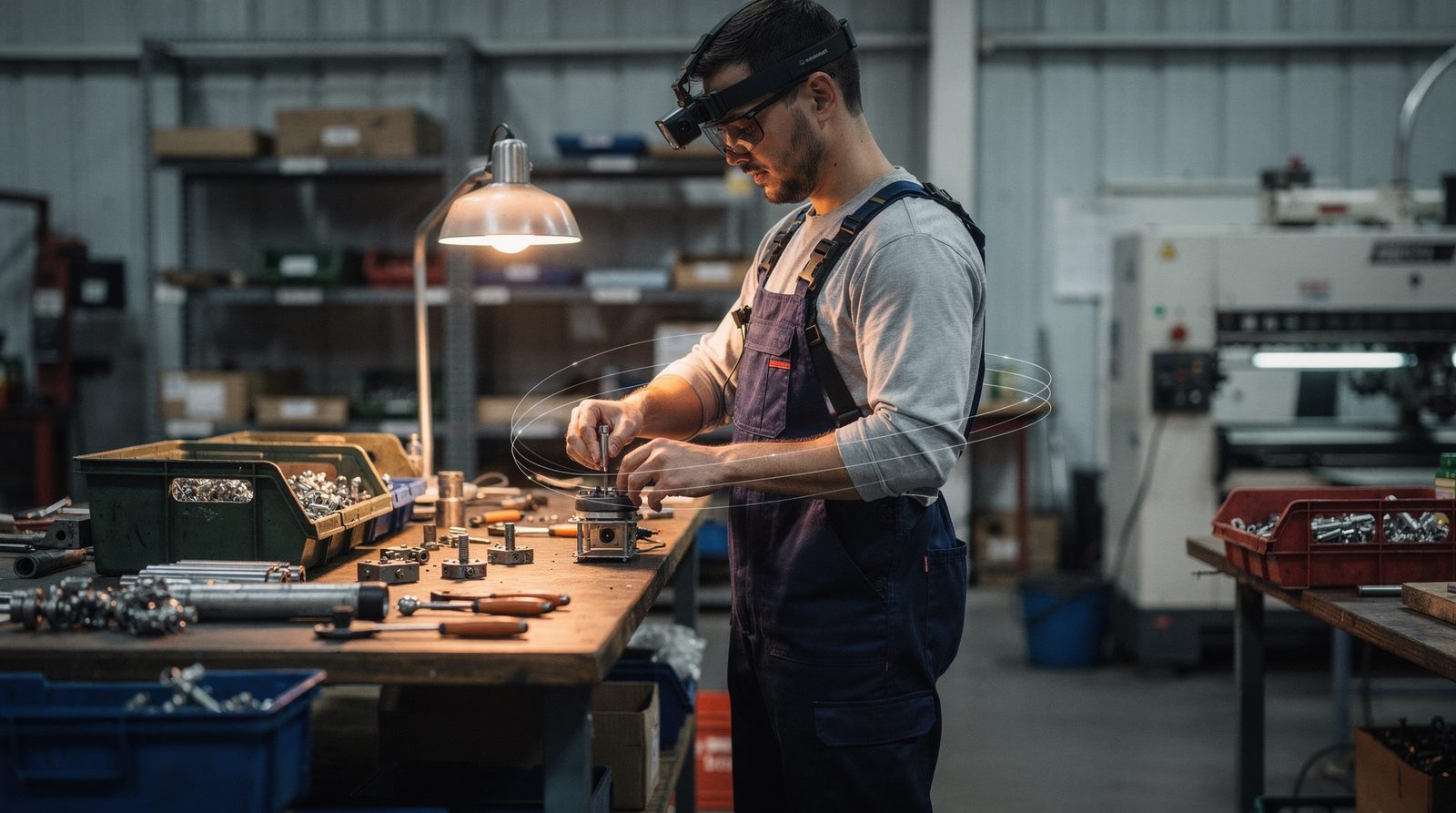
- Robot-free demonstration becomes normalA worker demonstrates a task wearing a lightweight capture rig during a normal shift. The data is retargeted onto the humanoid overnight. The robot never has to be present for the teaching. The 2026 research on robot-free demonstration and whole-body retargeting is the early form.
- World models replace a share of real dataGenerated video of plausible futures becomes a bigger share of pre-training. Expect the ratio of synthetic to real to keep rising, with real teleoperation reserved for the last mile of each task.
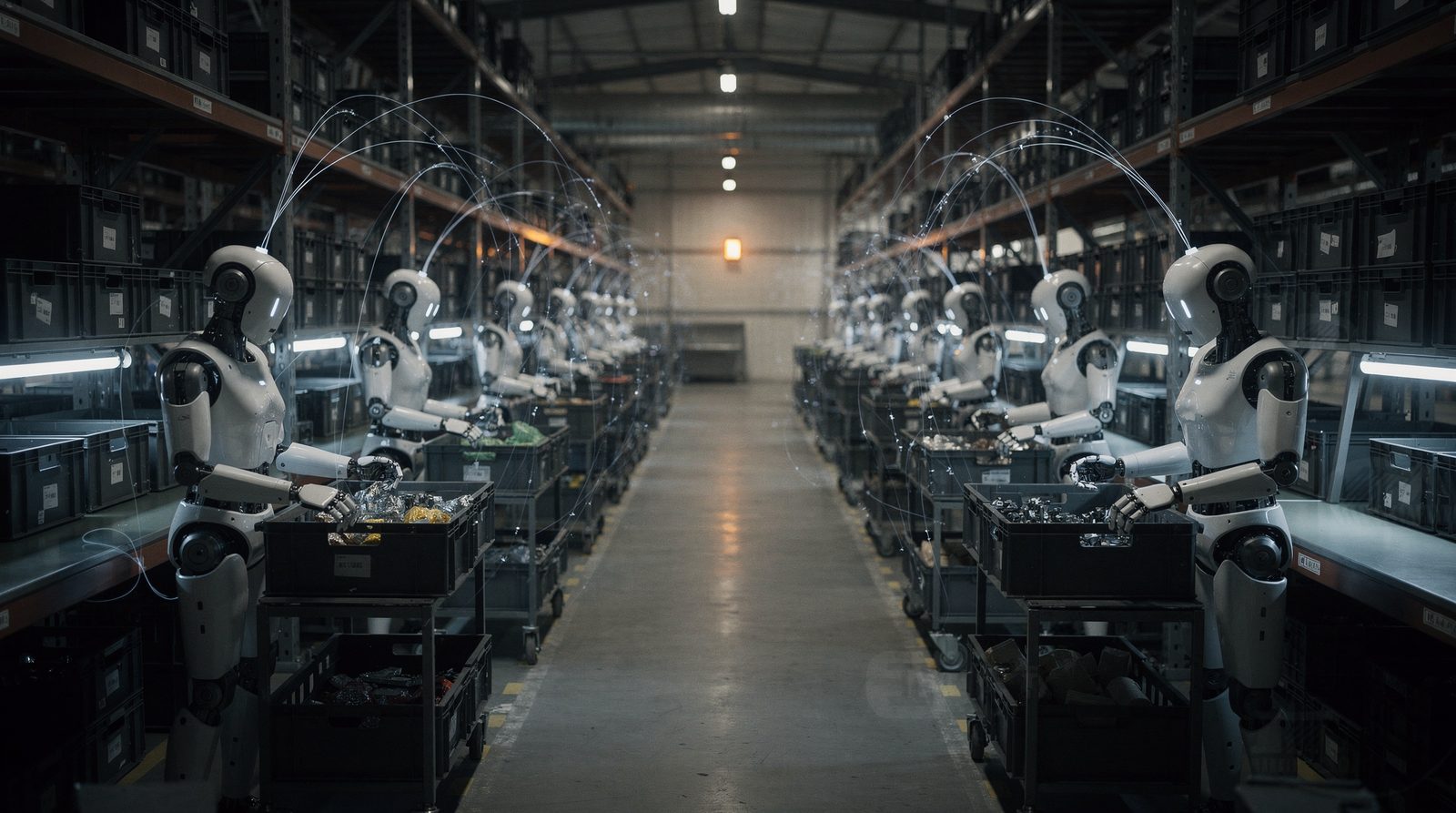
- Fleet learningEvery intervention on any robot in a fleet improves the shared model. A plant with 200 humanoids is not 200 learners, it is one learner with 200 bodies. Tesla’s data-centric approach bets on exactly this; so does Figure.
- Skills become productsVendors will sell “tote transfer” or “fixture loading” as a trained skill package with a stated success rate, the way MES vendors sell modules. Procurement will ask for the success-rate data sheet.
- The MES becomes the robot’s supervisorIn manufacturing, the execution system already decides what work happens where and when, and the vocabulary for that already exists: ISA-95 for the levels between the plant floor and the business, SEMI E10 for what counts as equipment uptime, SECS/GEM for how a tool and a host talk. The natural end state is the MES dispatching tasks to humanoids as it dispatches them to tools and people today, with the robot’s training data flowing back as process data. That integration, not the robot, is where most of the engineering will go.
The honest timeline
| Milestone | Optimistic | Realistic | What has to be true |
|---|---|---|---|
| 100,000 humanoids working worldwide | late 2026 | 2027 | Tesla’s Fremont line and Agility’s RoboFab run near capacity; Figure signs beyond BMW |
| A humanoid working inside a Class 1 cleanroom | 2027 | 2028–29 | Sealed variants; MES transaction integration; particle data accepted by fab quality |
| Skills trained from human video alone, deployed in production | 2026 | 2027–28 | Zero-robot-data policies hold their success rate on contact-rich tasks |
| One million humanoids deployed | 2029 | 2031–33 | Unit cost under $30,000; service networks; regulation settled |
Market estimates range widely: Goldman Sachs sees $38 billion by 2035; Morgan Stanley projects $152 billion by 2040. Both are forecasts, not measurements.
Where I could be wrong
If zero-robot-data training works on fiddly two-handed tasks, teleoperation shrinks to a niche and the whole middle of this site becomes history faster than I expect. If it does not, the operator-hour stays the binding constraint for years and the companies that own teleoperation capacity win. I lean toward the second, and I will update this page when the evidence moves.